Fifty-six percent of private-equity investors say a portfolio company running on an end-of-life ERP deserves a valuation haircut of more than ten percent at exit. For a sponsor weighing Sage Intacct against NetSuite inside a mid-market portco, that number reframes the decision as basis-point drag on IRR, not a back-office preference.
The pick is rarely about features in the abstract. It turns on how each platform handles the three line items a sponsor audits inside the reporting package: multi-entity consolidation, intercompany eliminations, and the integration bill across adjacent systems. Underneath that sits a fourth question that is harder to ignore every quarter, which is how much close work AI agents can now carry without touching the ledger directly.
Reporting Package: What a Sponsor Opens First
A PE reporting package arrives on the fifth business day, and it is read by someone who has seen hundreds of them. The expected structure is a consolidated P&L, a balance sheet with trial reconciliation, a cash bridge, and entity-level detail that drills back to the ledger. Both NetSuite OneWorld and Sage Intacct produce this. The difference is how the data reaches the consolidation layer.
NetSuite OneWorld uses a subsidiary hierarchy capped at 250 entities, with elimination and inactive subsidiaries excluded from the cap. Each subsidiary carries its own base currency and local tax rules, and consolidations run against the hierarchy itself. Sage Intacct does the same work through a dimension model: entities live as a dimension, elimination runs against inter-entity relationships, and the chart of accounts stays shared across the group. For a portfolio with a long tail of roll-up acquisitions and holdcos, the 250 cap deserves a look before the letter of intent is signed.
Intercompany Eliminations and Where Each Model Breaks
The architecture matters because intercompany eliminations are where multi-entity closes slip. NetSuite auto-generates elimination journals when transactions are flagged as intercompany, with the elimination subsidiary absorbing the entries. Sage Intacct relies on inter-entity transactions routed through a due-to/due-from account structure. Neither is self-balancing without governance, and both share the same failure mode: a late invoice from one entity against another that missed the accrual cutoff.
Which model is less painful depends more on how the existing close is run than on the vendor pitch. A portco with disciplined cutoffs and a thin intercompany ledger is well served by either. A portco with ten operating entities in three currencies will feel the difference inside the first quarter.
Implementation Timeline Against the Hold Period
NetSuite's SuiteSuccess methodology promises a go-live within roughly 100 days, mapped to about fifteen weeks across discovery, bundle provisioning, personalization, integration, UAT, and cutover. Sage Intacct's timeline for a comparable mid-market portco lands in the same envelope when the chart of accounts is clean and the entity count is under a dozen; it stretches past it when either is not.
BCG's PE migration work puts the typical bill at two to four percent of revenue with a two-to-four-year payback that has to finish inside the hold. The multi-entity close should be designed before the first entity is migrated, because the sequence the sponsor sees in month one is the one the ledger will perform for the remainder of the hold period.
The Integration Bill Is Where Portfolios Diverge
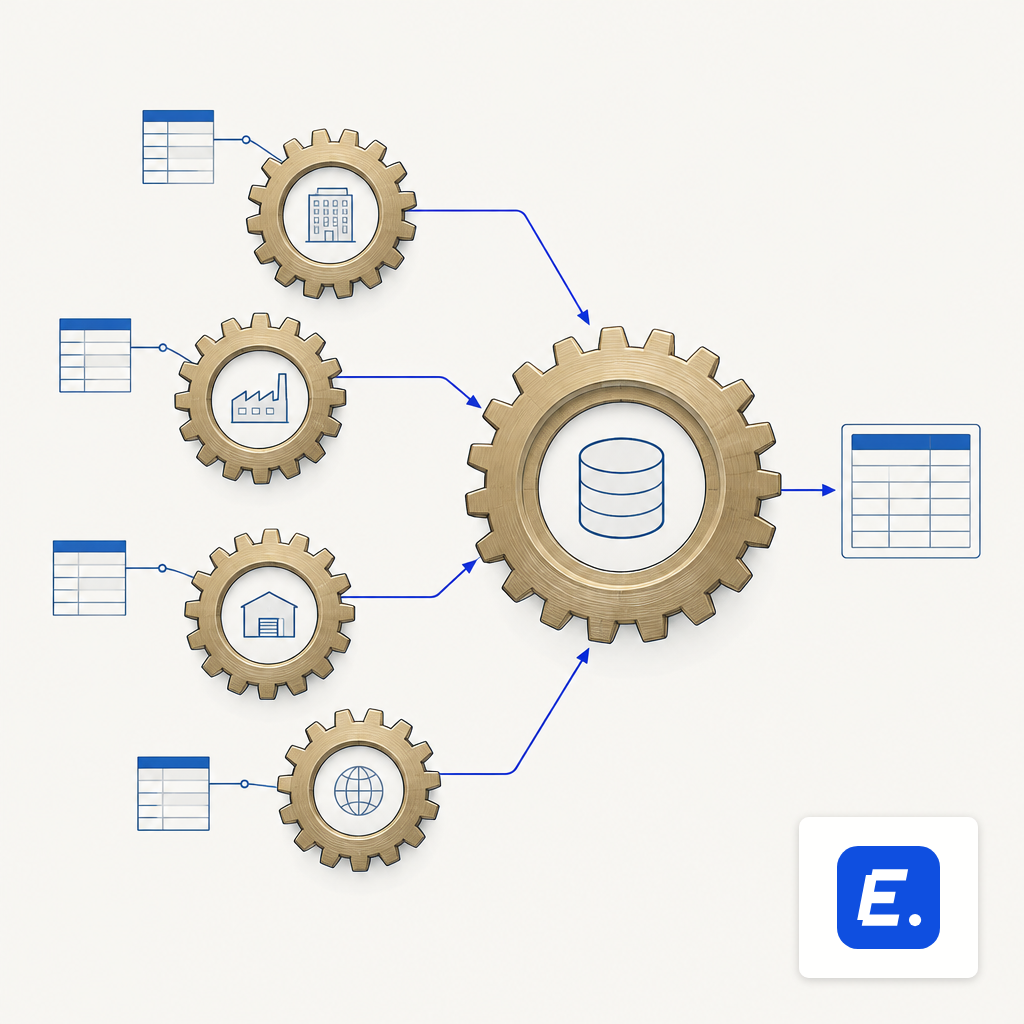
A portco rarely runs on ERP alone. There is a billing system, a CRM, a tax engine, bank connectivity, usually an industry-specific operational tool, and increasingly an FP&A layer. The integration bill for each platform is a function of both the ecosystem around it and the sponsor's willingness to standardize across portcos.
NetSuite's SuiteApp catalog is wider, which cuts initial build cost but leaves a trail of per-connector subscription fees that accumulate as the portfolio grows. Sage Intacct's marketplace is narrower, which pushes custom integration work earlier but keeps the per-portco cost picture simpler to track. For sponsors running several portcos in parallel, the integration line item compounds across the fund and often outruns the license line inside three years.
Close Discipline at Seven to Ten Entities
The arithmetic of a multi-entity close does not change with the vendor logo on the invoice. More entities mean more reconciliations, which mean more restatements unless the reconciliations themselves are automated. Closing faster is mostly a reconciliation problem, not a reporting one, and the ratio of restated to clean closes over the last four quarters belongs on the first slide of any ERP business case.
Sage Intacct's 2025 Release 4 added a Finance Intelligence Agent alongside its Close, AP, Time, and Assurance Agents, and made Close Automation with Sage AI generally available. NetSuite has its own AI roadmap, though the reconciliation surface it reaches today is narrower than Intacct's expanding one.
Scale Reach That Matters and Scale Reach That Does Not
NetSuite's global reach is real. The platform's spread across currencies, languages, and country coverage outruns Intacct's by a wide margin, and Gartner's 2025 Magic Quadrant for Cloud ERP for Product-Centric Enterprises promoted NetSuite from Challenger to Leader, joining Oracle Fusion, SAP, Microsoft, IFS, Epicor, and Infor in that tier.
For a US-based services portco with three entities and one functional currency, none of that reach surfaces in the reporting package. It is priced into the license either way. The right question is which capabilities the sponsor will actually exercise during the hold, not which ones look reassuring in a demo.
Sticker Price and the Line Items Behind It
Sage Intacct's list pricing lands between $400 and $800 per named user per month for full business users on annual terms. NetSuite's pricing is less transparent and is typically sold as a platform fee plus modules plus user seats. Neither sticker is the carry cost that matters.
The carry cost for a PE portco is license plus implementation amortization plus integration subscriptions plus the controller's time spent on workarounds. The last line is usually the largest and never appears in the quote. The shape of that math, laid out in what NetSuite costs to keep versus replace, is similar whichever vendor is on the other side.
Where AI-Native Architecture Shifts the Frame
Both vendors are adding agentic features inside an architecture that was not designed for them. An AI-native platform inverts the stack: role-based agents sit alongside the ledger rather than being bolted onto it, and the deterministic ledger remains the system of record the AI reads from and proposes to, but never writes to directly.
For a sponsor evaluating a portco today, that is a third option behind Intacct and NetSuite rather than a replacement for the comparison. A pilot sized to one entity and one reconciliation workflow answers the question faster than any demo script, and the cutover risk stays contained. An ERP migration with reconciliation proof turns the AP ledger into audit evidence instead of a project risk.
Back to the Sponsor's Exit Haircut
The valuation haircut figure the sponsor reads at exit is not really about which ERP sticker was on the invoice. It is about whether the close was clean, the eliminations tied out, the integrations held, and the reporting package landed on the fifth business day without a restatement. Sage Intacct and NetSuite both get there at mid-market scale. The question for the controller inside the portco is which path the specific entity shape walks, and whether the hold period leaves room for a third architecture to start carrying the work the agents can now genuinely do.