The common pitch for a bespoke CRM is that it costs less than Salesforce over five years and bends to any sales process the business can describe. Both halves can be true. Neither is the whole picture a controller needs before signing off on the capital request.
What follows is a sober build of the real number: features, architecture, integrations, people, and the running costs that start the day the system goes live. The point is not to argue a bespoke CRM is a bad idea. It is to make the build-versus-absorb call with figures that survive an audit committee review.
What a Bespoke Build Actually Includes
Published 2026 estimates cluster into three tiers. Raft Labs puts custom CRM development between $24,000 and $360,000-plus, split across a basic contact-and-pipeline build (two people, 8 to 12 weeks), a standard build with automation and reporting (three to four people, 12 to 20 weeks), and an enterprise build with AI features and deep integrations (five to eight people, 20 to 40 weeks). Appinventiv's 2026 breakdown lands in similar territory, with mid-level operational builds at $50K to $120K and enterprise builds at $120K to $250K-plus.
Feature-level pricing is where the number gets concrete. Workflow automation runs $8K to $20K. A customer portal with its own access layer is $12K to $30K. AI capabilities, honestly scoped, are $10K to $40K-plus. Reporting and dashboards sit at $5K to $15K. These are not optional for a modern CRM. They are the baseline a sales organisation expects on day one, and they stack additively.
The quieter line is design. A research-backed UI costs between $25,000 and $50,000 for a truly custom interface, and skimping on it reliably shows up later as the thing sales reps blame when adoption stalls. User adoption is not an engineering problem the backend team can fix in week 14.
Timelines Are Usually Longer Than the Quote
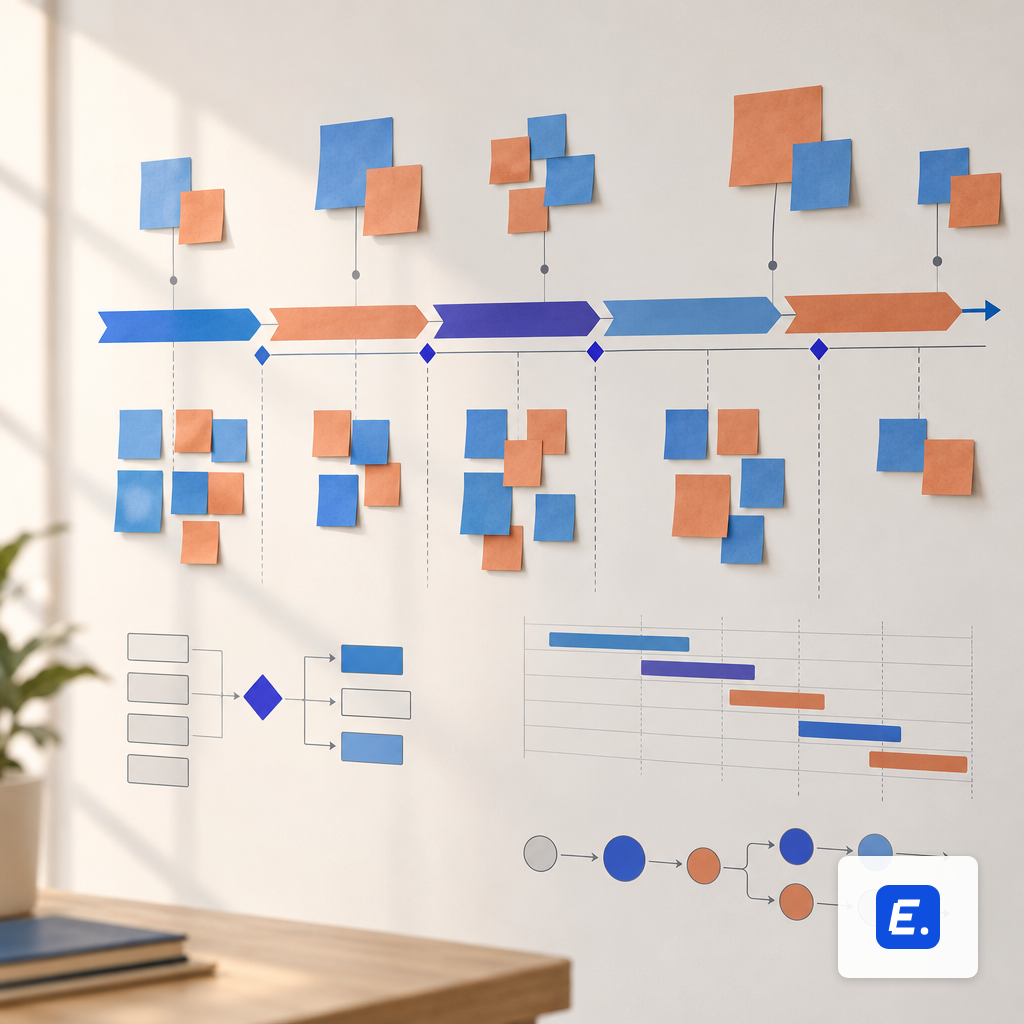
A disciplined team can ship a mid-scope CRM in fourteen weeks across five phases: two weeks of discovery, one week of architecture, six weeks of core build, two weeks of integrations and data migration, and three weeks of QA and handover. That is the optimistic case, with a locked feature list and no mid-project pivots.
The realistic case is longer. A mid-complexity CRM with proper data migration, performance testing, user acceptance cycles and a hypercare window typically lands around 9 to 10 months end to end. The gap between the two numbers is almost always consumed by three activities the quote underweights: scoping churn when stakeholders see the first working version, integration surprises, and data cleanup during migration.
That last one is predictable enough to plan for. On this site, the argument has been made before that bad data is always discovered during the load, not during discovery. The CRM build is no different. Lead-source taxonomies that looked clean in a spreadsheet turn into forty variants of "LinkedIn" once the migration script runs.
CRM Architecture Decisions That Drive the Bill
Three architectural choices account for most of the cost variance between a $60K build and a $200K build.
The first is the data model. A rigid contact-deal-activity schema is cheap. A flexible one that supports custom fields, custom objects, and per-tenant extensions is not. The custom-fields decision in particular compounds: cheap to design on day one, expensive to retrofit in month six. The same dynamic plays out in packaged ERPs, where custom fields become ERP debt faster than custom code, and the pattern transfers directly.
The second is identity and access. Role-based permissions, SSO, SCIM provisioning, audit logging and field-level security are not features users ask for in a demo. They are the controls a security review requires before go-live. Underscoping them delays launch; overscoping them doubles the auth module's cost.
The third is the integration layer. A CRM that reads from a billing system and writes back to it is a different system from one that only receives contacts. Two-way sync is a design decision long before it is an engineering one, which is the entire argument behind the piece on ownership before integration.
Integration Is Where the Budget Quietly Doubles
Published guides price each third-party integration at $2,000 to $10,000 depending on API complexity. Most CRMs end up needing eight to fifteen of them: email, calendar, ERP, billing, marketing automation, telephony, e-signature, data enrichment, support ticketing, warehouse, BI, and whatever custom internal system runs quoting. The arithmetic lands between $16K and $150K before anyone has shipped a differentiating feature.
The harder cost is the one that does not appear in the build quote: keeping the integrations alive. APIs version, rate limits tighten, auth models change, and the shape of a Salesforce or NetSuite payload shifts across releases. A production integration layer carries ongoing engineering load that most build estimates treat as rounding error.
And after all of it, the customer-view problem is rarely solved. Gartner has found that only 14% of enterprises have achieved a 360-degree view of the customer despite ongoing investments in integration. Building another CRM does not change the underlying reason: customer data lives in six systems with six different notions of what a customer is.
Five-Year Total Cost of Ownership, Honestly
Build cost is the headline. Running cost is the budget. Annual maintenance for a custom CRM runs $5,000 to $20,000-plus for a modest build, and the industry convention of 15 to 20% of initial build cost per year applies at the enterprise end. For a $200K build, that is $30K to $40K a year in maintenance alone, before hosting, security patching, or feature work.
A fair five-year TCO for a mid-scope custom CRM looks like this: $90K build, $18K per year in maintenance, $6K per year in hosting and third-party services, plus one meaningful re-platforming or major-version upgrade in year three at roughly 30% of original build cost. Call it $220K to $260K over five years for a 50-seat deployment, assuming nothing goes seriously wrong.
Against that, the packaged alternatives are not cheap either. Salesforce at 50 users runs $90,000 to $300,000 annually once properly configured, which is why custom builds keep getting approved. The real comparison for a finance leader evaluating an AI-native platform is not CRM-vs-CRM. It is CRM-plus-ERP-plus-integration-layer against a single agent-driven ERP platform where the CRM functions are absorbed into the same ledger-backed system that already runs AP, AR and the close.
That argument has been made at length in the piece on how the CRM is being absorbed into agentic ERP. The TCO consequence is that two line items on the five-year plan collapse into one, and the integration layer between them stops existing.
The Build-Versus-Absorb Decision for Finance Leaders
Market context matters here. Fortune Business Insights projects the global CRM market at roughly $126 billion in 2026, growing to $321 billion by 2034. The category is not shrinking. What is shifting is the location of the pipeline, contact and deal data: closer to the ledger, further from the standalone sales database.
The honest build-versus-buy framing is three-way, not two-way. Buy a packaged CRM and integrate it to the ERP. Build a bespoke CRM and integrate it to the ERP. Or absorb the function into an AI-native platform and remove the integration entirely. The right answer depends on how differentiated the sales process actually is, how much of the five-year budget is already committed to integration maintenance, and whether the controller is prepared to own a second production system.
For teams working through the decision, the practical next step is a scoped assessment of the current CRM-to-ERP boundary and the cost of maintaining it. A free assessment covers that mapping, and the ROI statistics piece covers the numbers behind the absorb side of the argument. A bespoke CRM can still be the right call. It should be the right call for reasons that survive the TCO math, not because the first quote looked lower than Salesforce.