Boards have started asking the question directly. Not "do we have an AI strategy" but "are these agents actually doing finance work yet, or are we paying for a demo." The honest answer in late 2026 is that the category has split. Some agent workflows are posting to production ledgers at scale, with controls auditors accept. Others still fail the first exception a controller throws at them.
The split is not about model quality. It is about whether the workflow has a deterministic check the agent must pass before anything hits the ledger. Where that check exists, the agent is a useful colleague. Where it does not, the agent is a confident intern writing journal entries. This piece walks the five workflows controllers ask about most and names which side of that line each one sits on.
What Counts as Production, Not Demo
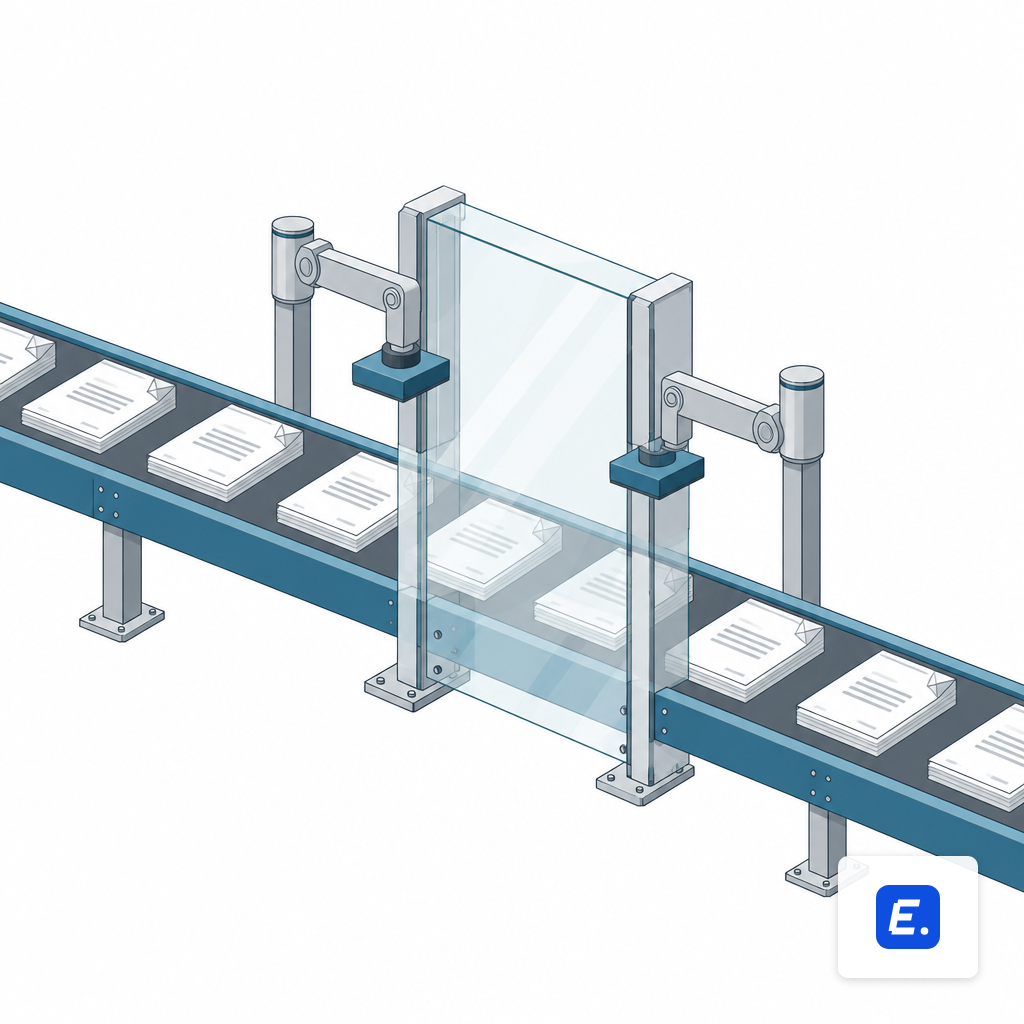
A production-grade agent workflow has four properties. The agent reads from systems of record rather than screenshots. The action it proposes is checked against a deterministic rule the model did not write. The post to the ledger is executed by the ledger, not the model. And every step leaves an evidence trail an auditor can replay.
That last property is where most 2025 pilots failed. Deloitte's 2026 State of AI in the Enterprise found that roughly 80% of organizations surveyed lack mature governance for agentic AI, including clear decision boundaries, real-time monitoring, and audit trails. MIT's Project NANDA report put the failure rate of enterprise generative AI pilots at about 95%, and traced the primary cause to integration rather than model performance. The agents that work in finance work because someone wired them into the ledger with a check in between, and the ones that do not are mostly demos running on exported data. Our own write-up of what an agent cannot do in a ledger covers the structural reasons the check has to be deterministic, not learned.
AP Coding and Three-Way Match Are Real
Accounts payable is the workflow where agents have genuinely crossed into production. The pattern that works is narrow: extract invoice fields, resolve the vendor against master data, propose a GL code and cost centre, run the three-way match against the PO and receipt, and route to a human only on an exception. The agent never posts. The ledger posts, after a threshold-aware approval the agent did not write.
The volumes support the claim. Vendors reporting production figures put GL coding accuracy at 92 to 95% on routine expense categories after a few hundred to a thousand training invoices. Touchless processing in best-in-class AP operations now sits at 49.2% against a 32.6% industry average, per Ardent Partners' Metrics that Matter. The headline figures some platforms publish — 70% touchless hybrid, 90% at maturity — are achievable, but only in shops that have cleaned vendor master data and set a real approval matrix. The failure mode is skipping that work and then blaming the agent for coding freight to the wrong account.
The AP agent controls that matter are not clever. They are a vendor allowlist, a GL mapping with a confidence floor, a duplicate check against prior invoices, and a dollar threshold tied to the delegation of authority. The specific thresholds are their own problem, covered in AP agent approval thresholds.
Bank Reconciliation Is the Clearest Win
Bank rec is where agents post the strongest numbers because the workflow is almost entirely deterministic. Two sides, a match rule, an exception queue. A vendor like HighRadius reports 99% reconciliation accuracy on multi-entity volumes, with agents classifying variances and posting adjusting entries through the ledger's own journal API. Independent 2026 benchmarking puts error rates below 0.5% for AI-matched reconciliations versus 1 to 8% for manual ones.
The ceiling is real, though. Teams that deploy a matching engine without a context layer stall at 85 to 92% match rates after the first few months, because the remaining transactions are the ones that need something the agent cannot read: a side agreement, a wire reference the counterparty did not populate, a known timing quirk. The fix is memory, not a bigger model. This is the same point we make in closing faster is a reconciliation problem: the match rate is a function of the data the agent can see, not the algorithm it runs.
Flux Commentary Is Real as a Draft
Variance commentary is the first workflow where "the agent does it" and "the agent helps a human do it" produce visibly different artefacts. The draft is good. Agents calculate period-over-period and budget variances, pull the underlying transactions, identify the two or three journals driving the move, and produce a paragraph a controller can edit. Accenture's internal pre-close commentary system covered 737+ company codes targeting up to 95% of variance content generated automatically.
What the agent cannot do is own the commentary. The 5% it misses is the 5% that matters: a renewal that will not repeat, a one-time severance accrual, a reclassification an auditor flagged last quarter. Treating the draft as the final answer is how finance teams end up explaining to the audit committee why the MD&A called a permanent step-up temporary. The working model is proposal plus controller sign-off, with the sign-off captured as evidence the same way a journal approval is.
Intercompany and Revrec Are Mostly Not Ready
Intercompany eliminations and revenue recognition are where the honest answer is "not yet, except for the easy slice." Both workflows mix deterministic mechanics with judgment that lives outside the data the agent can see.
For revrec, agents reliably extract contract terms, propose performance obligations, and apply standalone selling price allocations once methodology is set. What they cannot do is resolve the judgment ASC 606 actually turns on. A 2026 practitioner walkthrough is explicit that collectability assessment, variable consideration constraint, and SSP methodology for novel products require human judgment the agent flags but does not resolve. Model evaluations have also shown that open-source models returned "no related clause" over 30% of the time when the relevant text was present, which reads to the reviewer exactly like a clean contract. For a SaaS business with 80 to 120 contract modifications a quarter, the preliminary analysis compresses from days to minutes, but the modification classification stays with technical accounting.
Intercompany is similar. Matching two-sided IC transactions, chasing the counterparty entity, and proposing eliminations is tractable. Resolving transfer pricing disputes, allocating a shared service cost across entities with different functional currencies, or deciding whether a management fee is a reimbursement or revenue is not. Teams that scope the IC agent to the matching and chasing half, and leave policy to the group controller, get a usable workflow. Teams that try to automate the policy end up with a very fast way to produce wrong eliminations.
What the Scorecard Means for the Board Answer
The defensible board answer in late 2026 is that agentic ERP is real in the workflows where a deterministic check sits between the model and the ledger, and still experimental where the check depends on human judgment the agent cannot see. AP, bank rec, and flux drafting clear the bar. Intercompany policy and revrec judgment do not. Industry adoption data agrees that the gap is narrow but real: McKinsey found 23% of enterprises had scaled an agentic AI system somewhere, with no more than 10% reporting scaled deployment in any individual business function.
The scorecard also makes the buying question concrete. A platform that puts the agent inside the ledger with the check wired in is a different product from a wrapper that calls an LLM on exported data. The AI in ERP approach we take, and the architecture behind the erp.io platform, is to keep the ledger deterministic and let agents propose through controls the ledger enforces. Controllers evaluating vendors can get a structured starting point from our AI ERP RFP scoring framework, which turns most of this scorecard into questions a demo cannot talk around.